
Shall I Compare Thee to a Mother's Hands
Poetic Image to Graphic Image
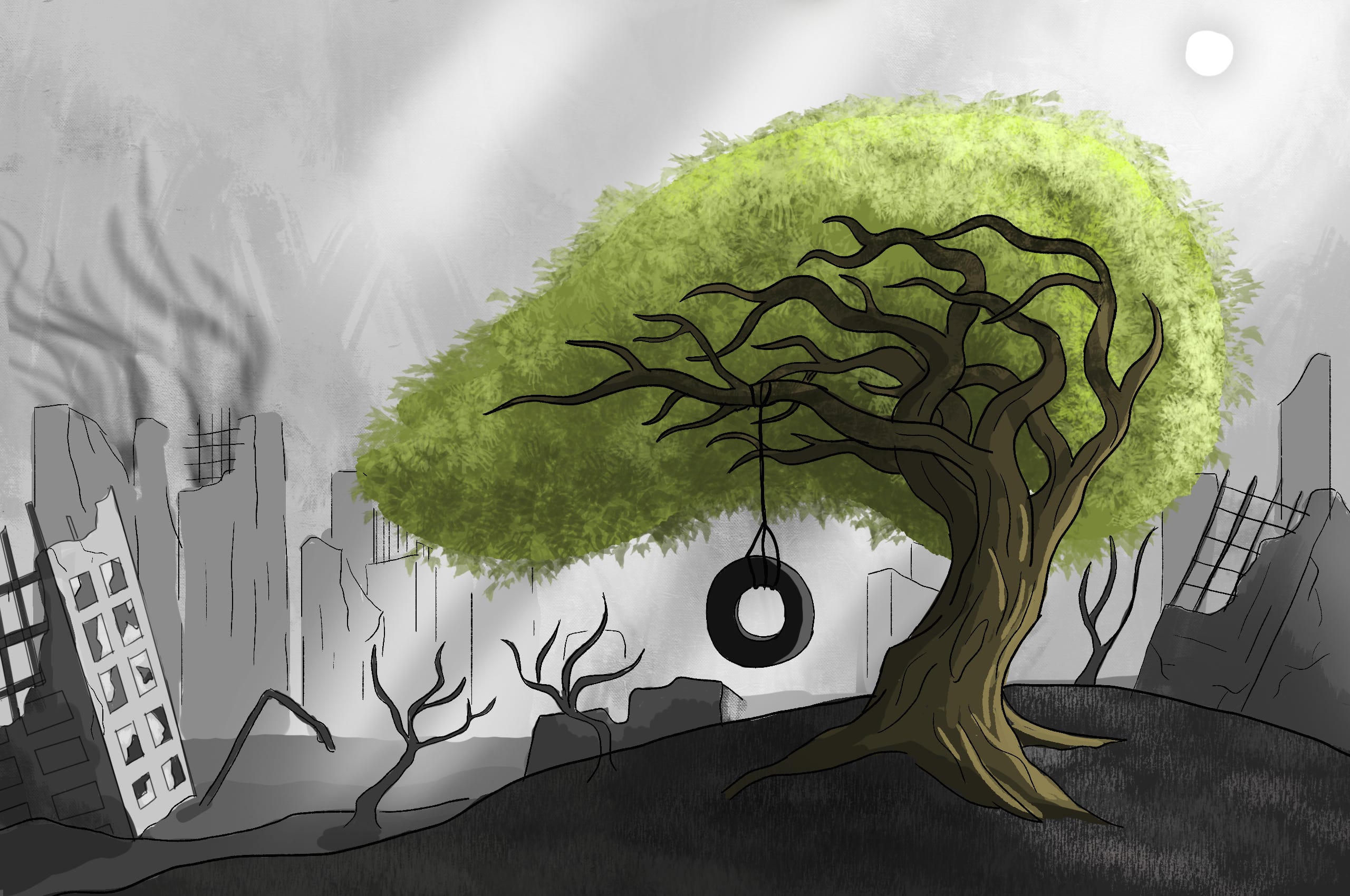
Crow News:
A word on the window sill, good friend. We are currently open for submissions for TBLM’s Issue 64. The deadline is May 31, but we are close to capacity in (untranslated) poetry and fiction. We’ll most likely close accepting submissions in these two categories in a couple of days. So do gather your skirts and get a move on if you intend to submit original English poetry or fiction. Send us your work via the submit form or click on the image below to go to the submit page.

Fortnightly Freudenfreude:
We can now get down to distributing the virtual laddoos. Sharon Aruparayil, whose story ‘Smoke Become Me’ we’d published in TBLM’s December 2025 issue, is the Asia winner of the 2026 Commonwealth Short Story Prize. You can read her prize-winning story Mehendi Nights in Granta’s special issue. Congratulations, Sharon! Congratulation too, to all those who sent in their work for the prize: you showed up, you staked your work, you made the matter matter.
Literary prizes, like literary magazines, cannot avoid comparisons. The comparison is a necessary and tragic consequence of our finiteness, our human limitations. On the other hand, the comparison also lies at the heart of the creative act. It is out of this finiteness that we fumble our way to compassion. Pervin Saket’s selection for this post’s colophon, Shubhang Ojha’s ‘The Cairn of Seeds’, serves as a striking illustration. Ojha’s graphic narrative deals with an alignment of two experiences, each so unique as to seem incomparable with anything else.
Pervin Saket | Shall I Compare Thee to a Mother’s Hands:
Poetic Image to Graphic Image
Earlier this year, some friends and I watched Adishakti Theatre’s richly-imagined adaptation of Hamlet, and later got talking about why certain texts inspire multiple reincarnations. From a theyyam Othello or a zombie Juliet to Adishakti’s signature combination of kalaripayattu, music, physical comedy and dance, Shakespeare’s plays seem to remain relevant specifically because they invite shifts in treatment, mediums and politics. At some point, I must have claimed, because I always do, that his sonnets are a notch superior, and they must have refuted me, because they usually do, and then we must have promptly forgotten the whole exchange. So imagine my satisfaction when I encountered Shubhang Ojha’s work, demonstrating how the Bard’s poetry can also radically transform in the hands of a perceptive artist.
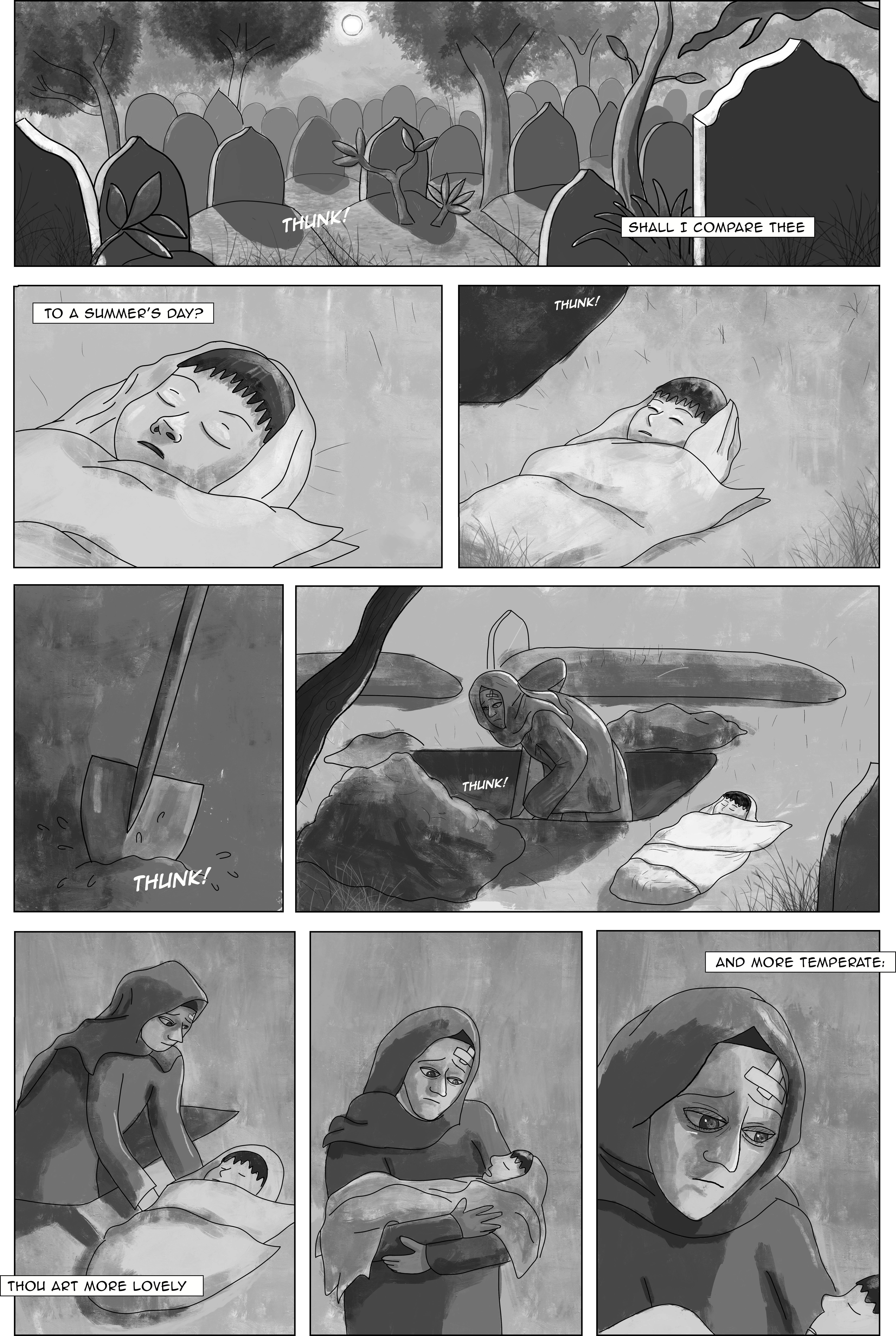
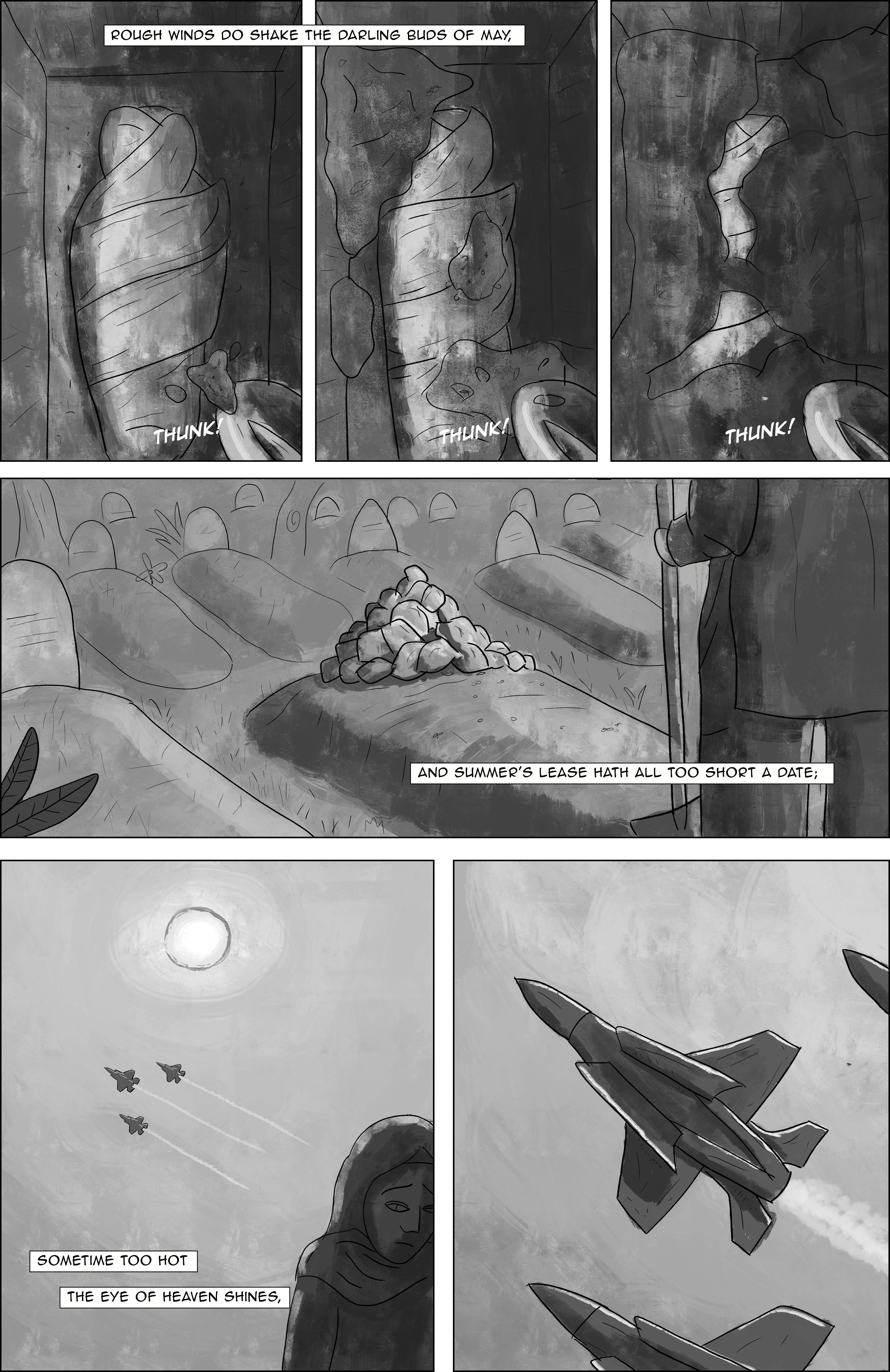
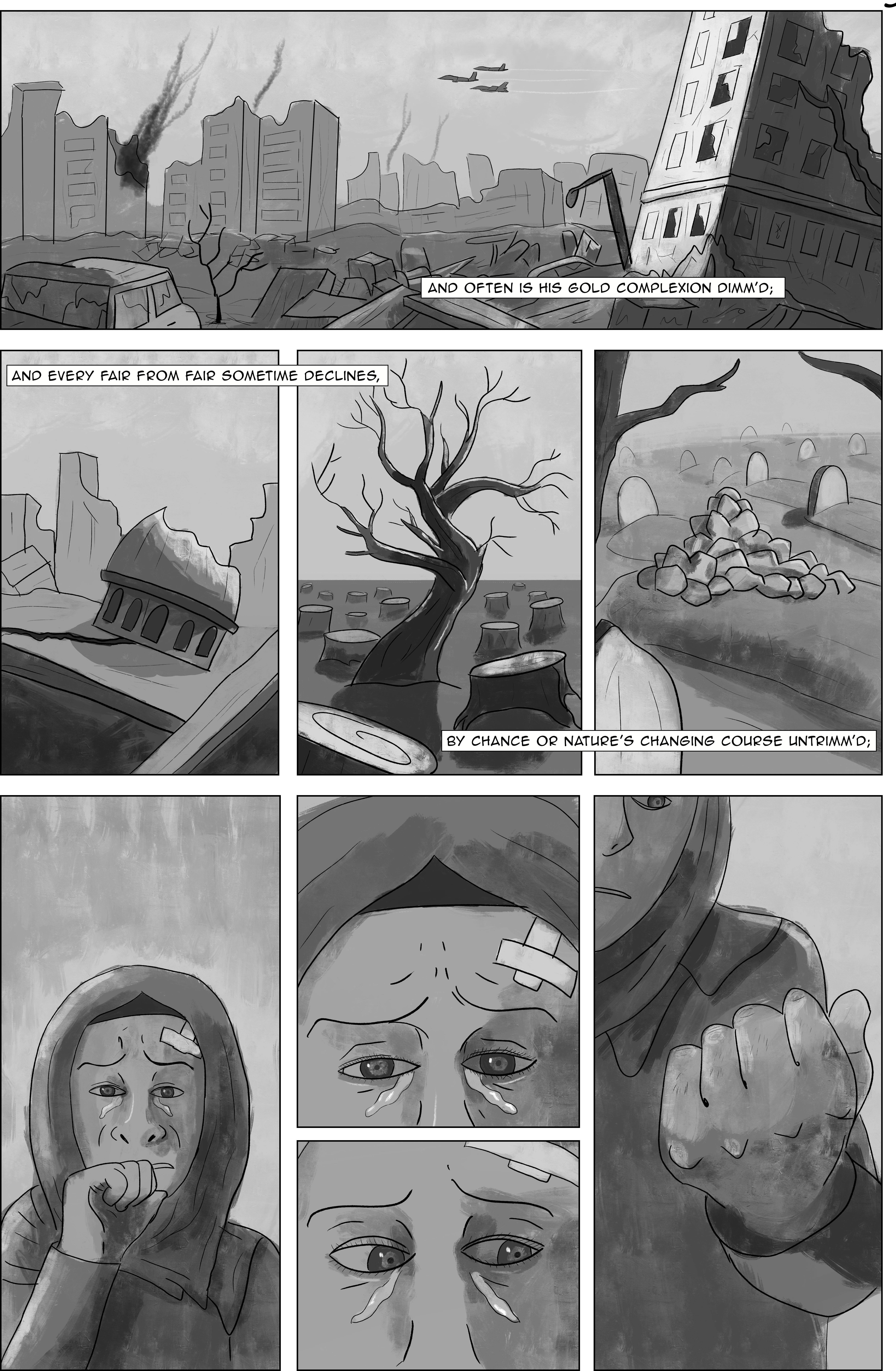
Sonnet 18, in particular, is so deeply embedded within cultural memory, so frequently quoted in weddings, classrooms and greeting cards, that its images feel sealed in their original romantic context. A poem about beauty and youth. About art and immortality, and yes, love. However, with Ojha’s images of war and grief, almost immediately, one of the most recognisable poems in English, turns unfamiliar. Unsettling even. Each line is recast to depict the human aftermath of military attacks on children and civilians, turning the sonnet on its head.
What moved me most about the adaptation (and not just because I was reading it last week, around Mother’s Day) was how persuasively romantic love is recast as maternal love. Ojha’s illustrations appear to shift the lines, seamlessly, eerily, from 16th century courtship to the horrors of contemporary warfare. From the tenderness of romantic love to the ache of maternal grief. Consider the line, ‘And summer’s lease hath all too short a date’, accompanied here by an illustration of a child’s fresh grave, surrounded by other graves on all sides.
While all these reassociations are inventive and devastating, I responded most strongly to how the sonnet’s final line gets transformed: So long lives this, and this gives life to thee. For Shakespeare, ‘this’ refers to the poem itself, and by extension, to art. The poet’s verse, he suggests, like all art, is capable of keeping the beloved alive, and therefore defeating even death. Ojha’s final graphic sequence however, dismantles this artistic ego. ‘This’ for Ojha, is not Shakespeare’s text or his own illustrations, but outside the page entirely, gesturing to the real-imagined tree, to nature, to the living. It reminded me of Joyce Kilmer’s famous lines: I think that I shall never see / A poem as lovely as a tree. The adaptation does not reject Shakespeare’s longing for immortality, but roots that longing in something humbler —mud, tree, earth.
Colophon: The Cairn of Seeds (Excerpt)
SHUBHANG OJHA
Full version published in: TBLM | Graphic Fiction, Issue 63 (April 2026)
-1-
-2-
-3-
-4-
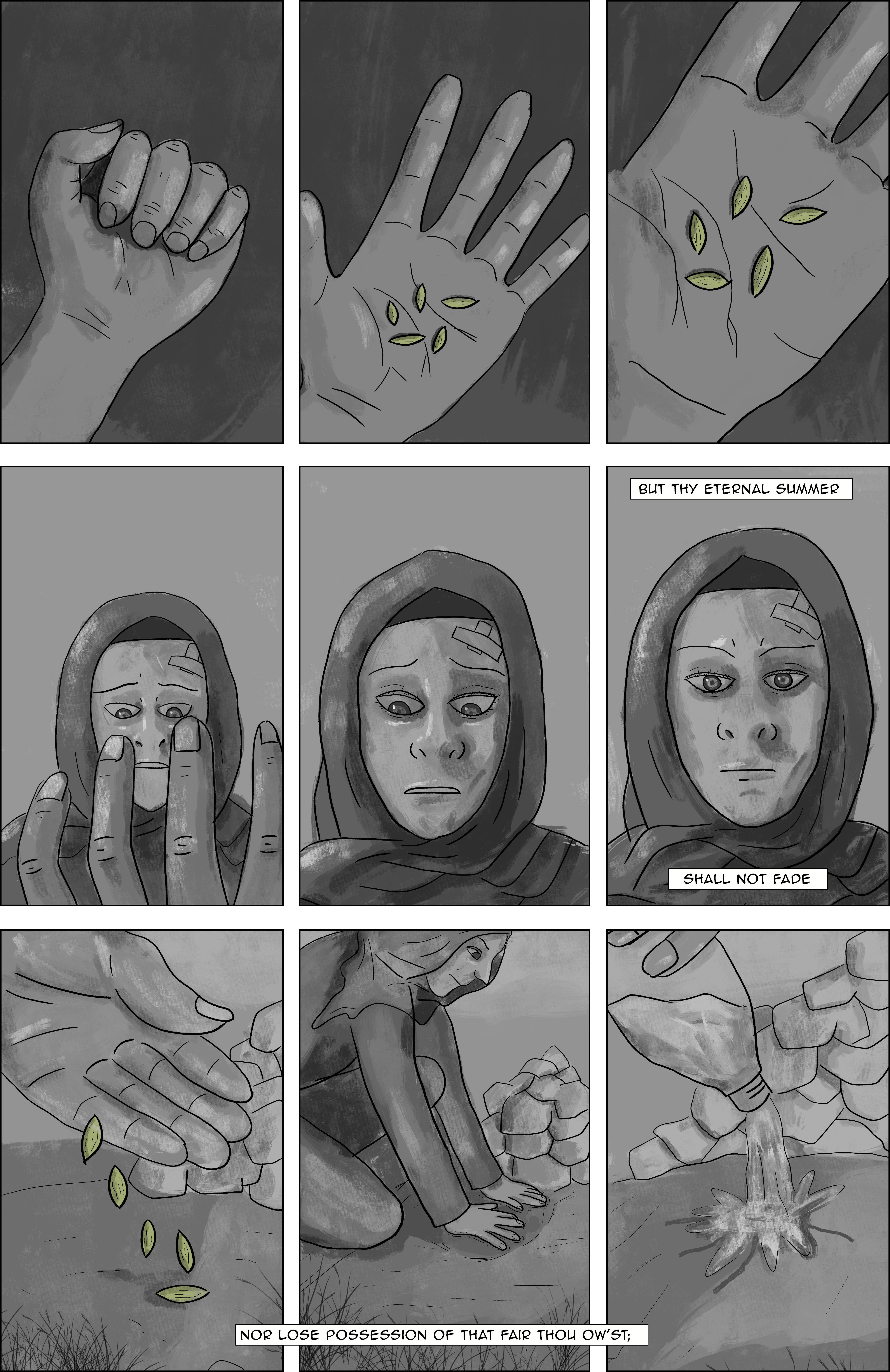
→ Continued at: The Cairn of Seeds. TBLM | Graphic Fiction, Issue 63 (Dec 2025)
—
SHUBHANG OJHA is a multimedia storyteller and self-taught artist, with a background in Literature, Creative Writing and Media Studies; as well as Urban Studies and Research.
His other works include an ongoing comic-book on the shaping of meat politics in India; a theatrical adaptation of Shakespeare’s Hamlet set within Bangalore’s contested slaughterhouses; and illustrations for a documentary film on the survivors of the partition of 1947.
In his free time, he enjoys reading, hiking, screaming into the void and cooking. [Text source (excerpted): Shubhang Ojha]
ACKNOWLEDGEMENTS:
Image credits: © Shubhang Ojha.

We hope you enjoyed reading this issue of Crow & Colophon. Subscribe for free to receive updates about The Bombay Literary Magazine and notes of a literary persuasion. For information about how to send your work to The Bombay Literary Magazine, please visit our submit page.
A beautifully gut wrenching juxtaposition of words and art
Oh wow! Thanks for featuring my work, this deep-dive was such a pleasure to read!